

Brunei Laws and Rules
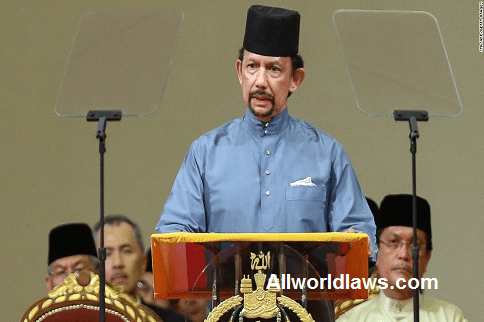
The Islamic Sultanate of Negara Brunei Darussalam was a British protectorate from 1888 until World War II when the Japanese possessed Brunei. After the Japanese were vanquished in 1945, the British continued control. In 1959, Brunei wound up self-administering limitedly as indicated by the Constitution, with Britain staying in charge of resistance and outside arrangement. In January 1984 Brunei turned out to be completely autonomous as indicated by the 1979 Treaty of Friendship and Co-activity between the UK and Brunei. From that point forward, Brunei has turned into an established government with a pastoral government. Administration in Brunei is guided by the Constitution and the state belief system of Melayu Islam Beraja (MIB) or ‘Malay Islamic Monarchy’, which exemplifies standards of Malay culture, Islamic religion and the political structure under the government.
Brunei is one of only a handful few staying total governments on the planet, and the main in Asia. As total ruler, the Sultan of Brunei is in this manner the head of state and head of government. He is the King, Prime Minister, Minister of Defense, Minister of Finance and Minister of Foreign Affairs and Trade. He is additionally the official ‘watchman and defender’ of Islam and convention in Brunei.See the Prime Minister’s Office site in English.
Brunei Legal System
Brunei’s lawful framework depends on British precedent-based law, with a parallel Syariah law framework for Muslims, which supersedes the precedent-based law framework in zones, for example, family and property law. In 2014 Brunei turned into the primary Southeast Asian nation to receive strict Syariah law, that applies to Muslims and non-Muslims, with the establishment of the Syariah Penal Code Order 2013.
Since 1962 Brunei has been controlled under a State of Emergency. The Sultan has wide authoritative forces, and amid a State of Emergency the Sultan may pass any enactment he regards convenient by Emergency Order. There is no legal survey of his activities.
See itemized data on the lawful framework in the Brunei pages of Legal Systems in ASEAN (open access) – from the ASEAN Law Association. There are sections on: Historical Overview, Sources of Law, Government and the State, Legal Procedure and The Legal Profession. The data is a couple of years obsolete, yet is as yet a helpful presentation.
Wellsprings of Law
The laws of Brunei comprise of the Constitution, Statutes and backup enactment, Islamic laws, caselaw/legal point of reference, and the customary law of England.
See point by point data about the wellsprings of law in the Sources of Law section of the Brunei pages of Legal Systems in ASEAN (open access).